
Last updated November 18, 2026
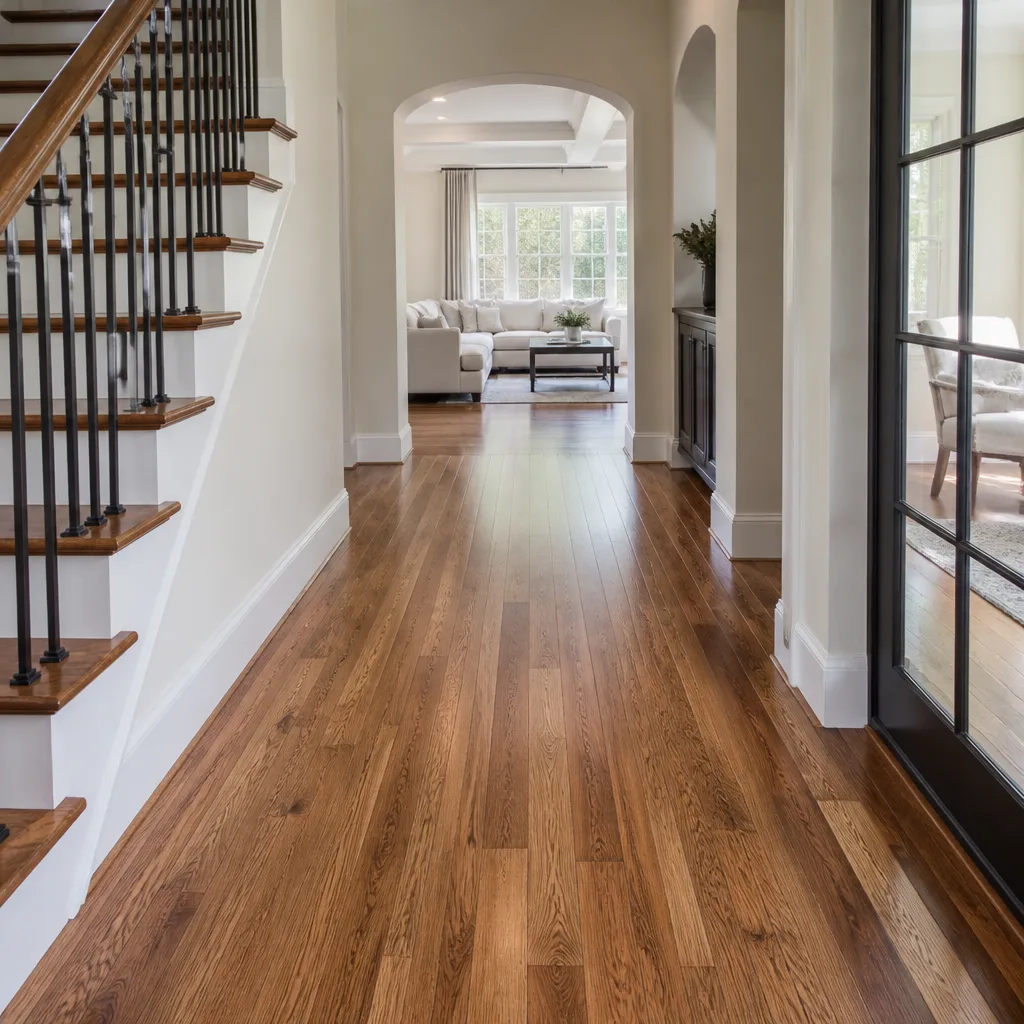 Hardwood
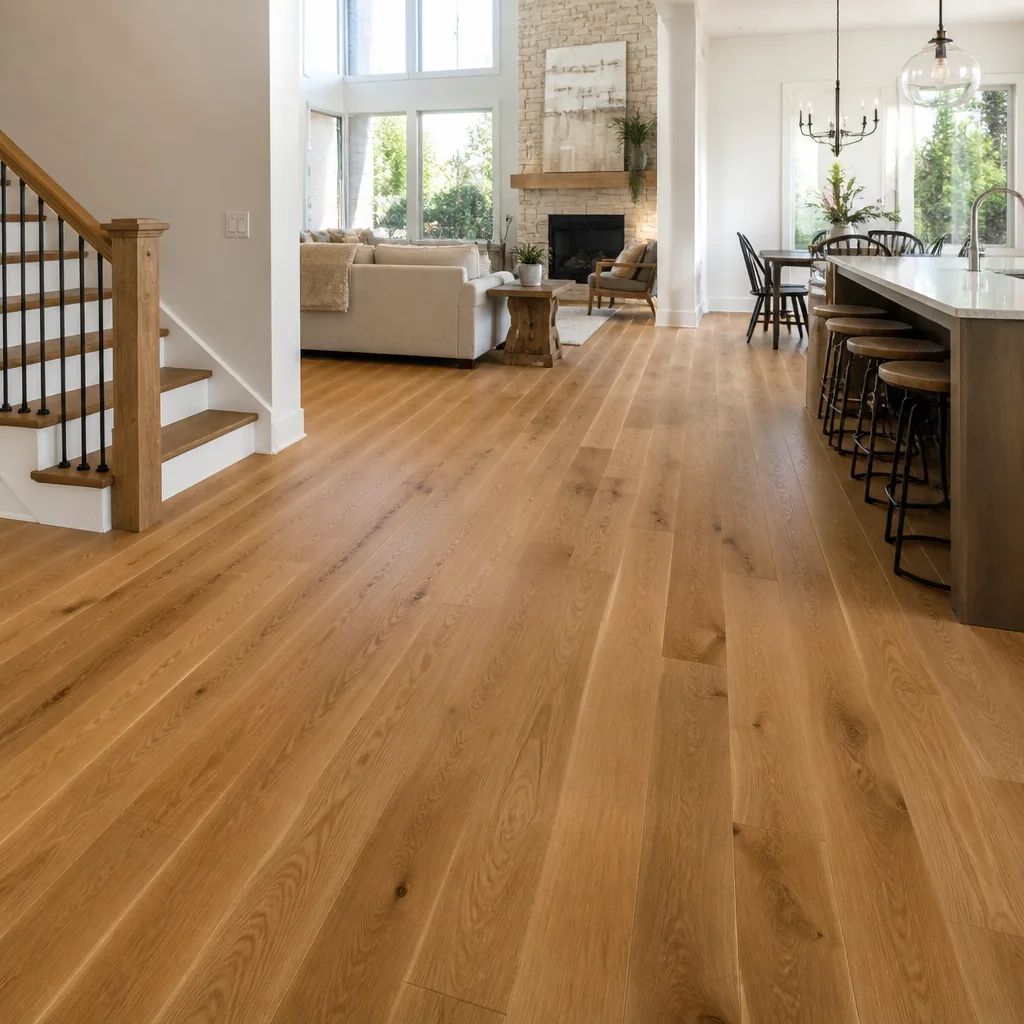 Engineered hardwood
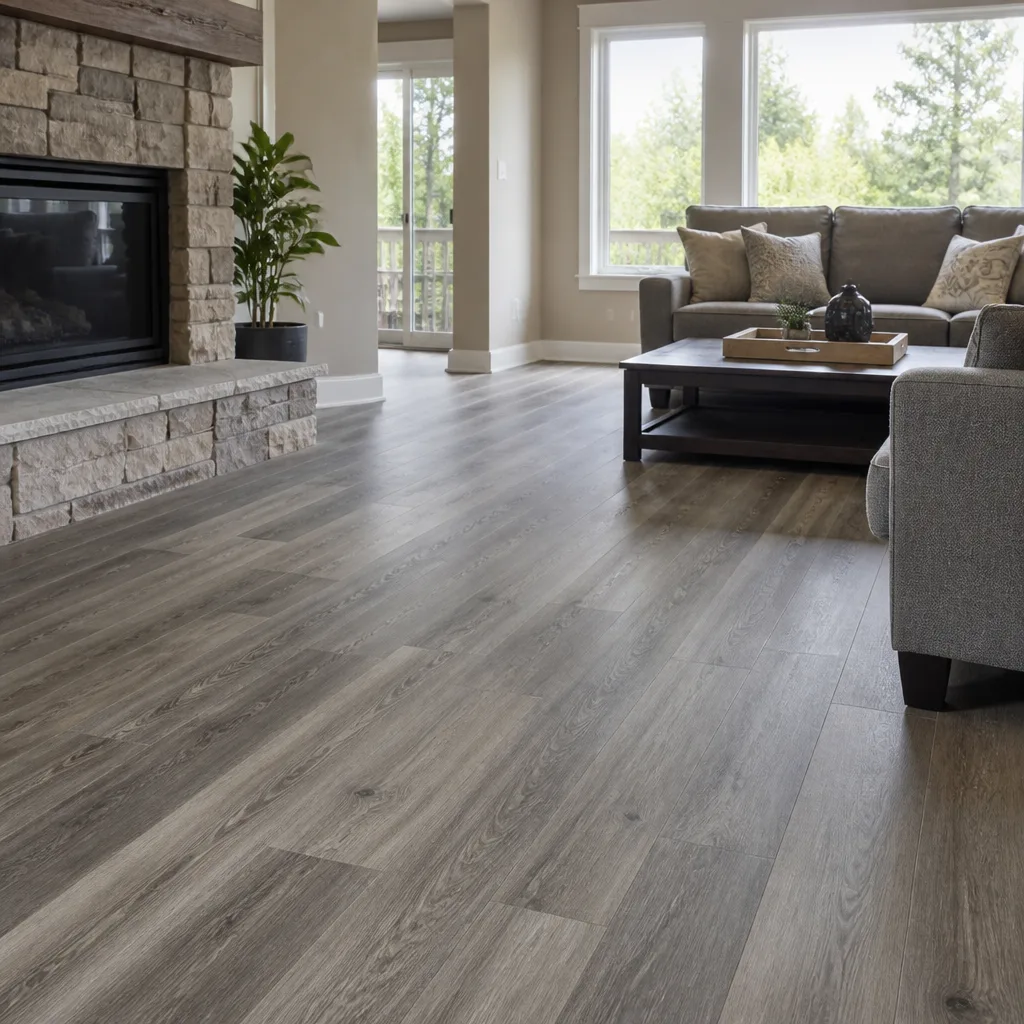 Luxury vinyl plank
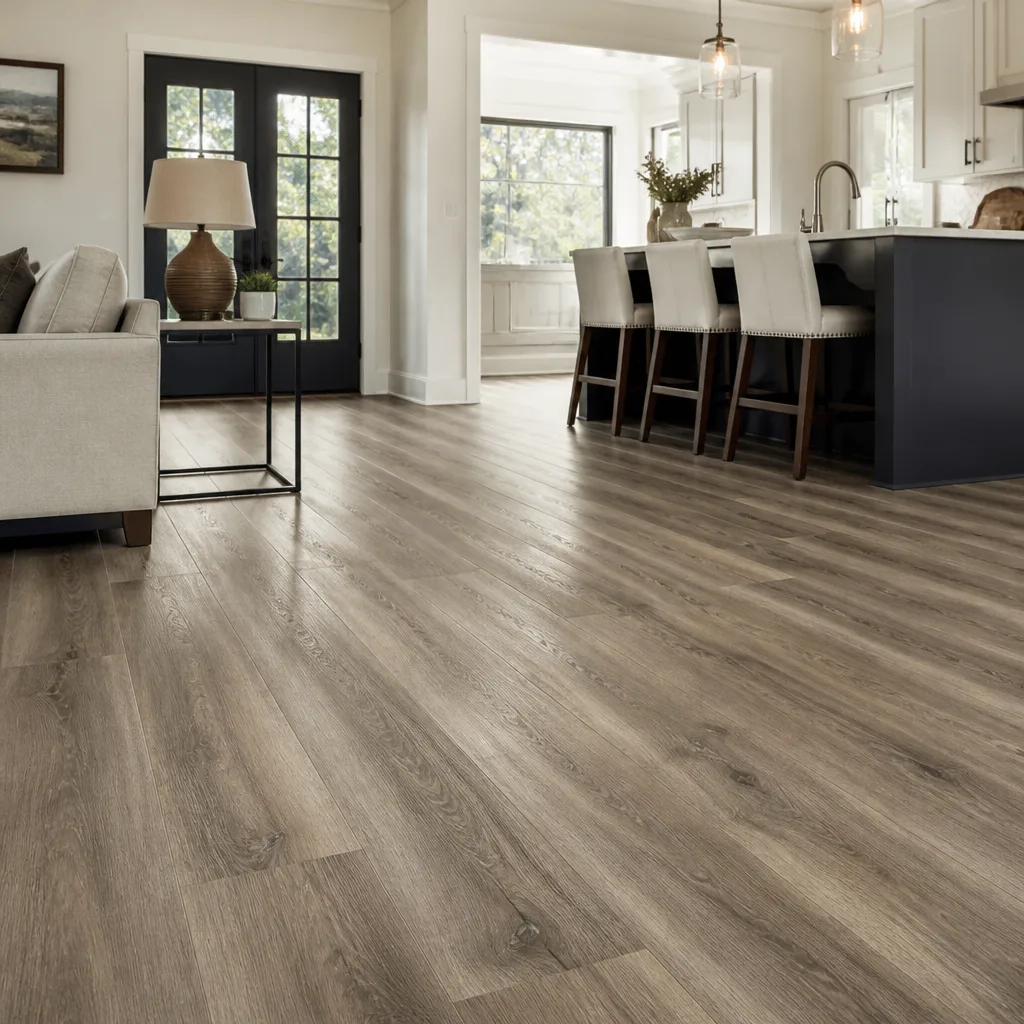 Laminate
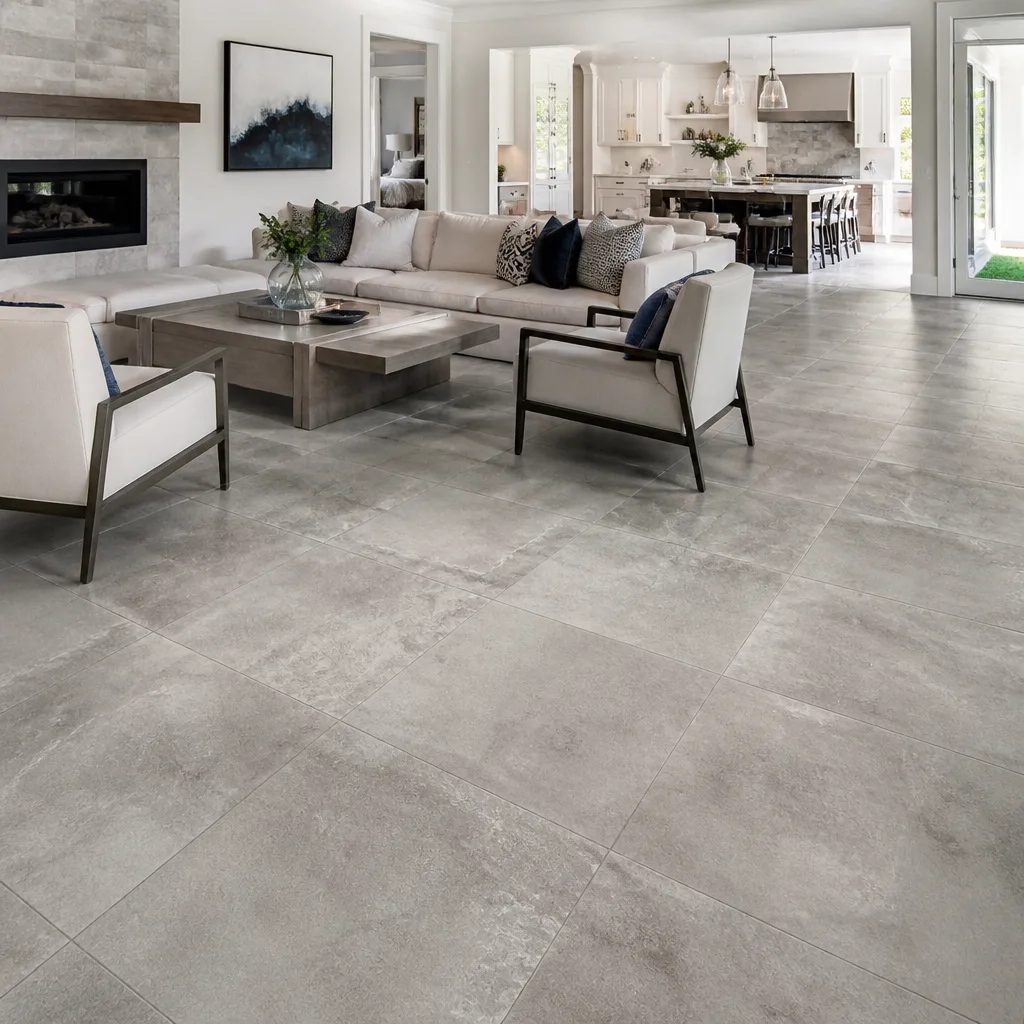 Porcelain tile
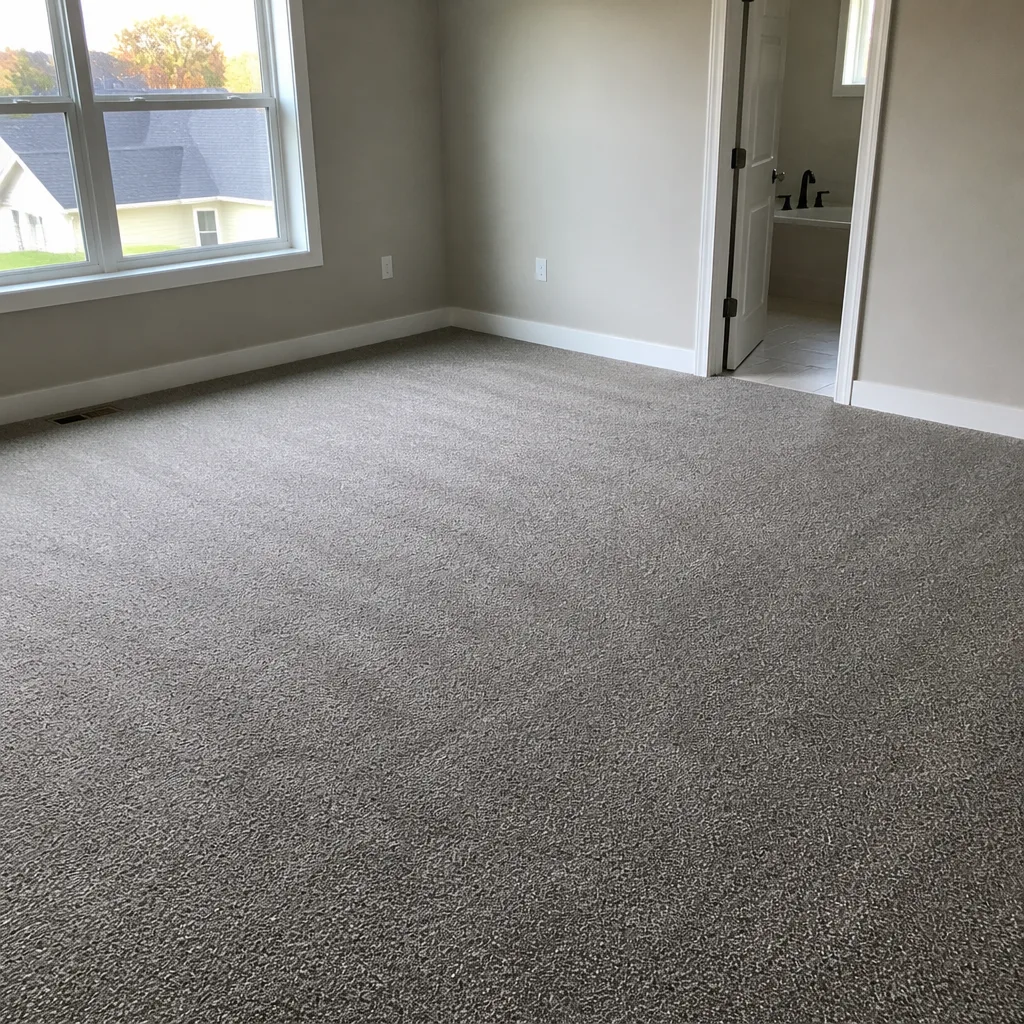 Carpet
 Shaw
 Mohawk
 COREtec
 Pergo
Free in-home measure and written estimate: Shaw, Mohawk, COREtec and Pergo lines compared on your own rooms, with carpet, tile, vinyl plank, laminate and hardwood laid out side by side
Get your free estimateFix It or Start Over: Flooring Repair vs Replacement
A floor that looks savable is sometimes hiding a subfloor failure that makes full replacement cheaper than patching. And a floor that looks destroyed from pet staining or surface scratches is sometimes a 48-hour refinishing job away from looking brand new. That gap between what you see and what’s underneath is where most repair-vs-replace decisions actually get made. In this guide, we walk you through a triage system based on damage type rather than dollar thresholds, explain which materials can genuinely be repaired, and give you the questions to ask any contractor before you commit. We install and refinish floors across Paradise, and we’ve walked into enough confusing situations to know that cost is the last question you should be asking, not the first.
Quick Answer
Repair your floor when the damage is confined to the surface or a small area and the subfloor is sound. Replace it when water has reached the subfloor, when the damage spans more than a small patch that can’t be matched, or when the material itself is replace-only by design. Cost is downstream of that structural answer, not the driver of it.
Styles & brands we work with
- Hardwood
- Engineered hardwood
- Luxury vinyl plank
- Laminate
- Porcelain tile
- Carpet
- Shaw
- Mohawk
- COREtec
- Pergo
Table of Contents
- The Damage-Type Triage: Three Categories That Decide Almost Everything
- Which Flooring Materials Can Be Repaired or Refinished?
- The Matching Problem Nobody Warns You About
- The Hidden Cost of Deferred Replacement
- Why Paradise Homes Put Floors Through a Specific Kind of Stress
- Three Questions to Ask Before You Accept Any Quote
- What the Process Actually Looks Like
- Common Mistakes to Avoid
- When to Call a Professional
- Frequently Asked Questions
The Damage-Type Triage: Three Categories That Decide Almost Everything
Before you call anyone, sort the damage you’re looking at into one of three buckets. This single exercise will tell you more about whether you’re facing a repair or a replacement than any price estimate will, because the three categories have fundamentally different answers.
1. Surface damage. Scratches, dull spots, scuffs, small dents, a single cracked tile, a torn carpet seam, discoloration from sun exposure. This is cosmetic and stays in the wear layer. For hardwood, surface damage is often the easiest category to fix, because a sand-and-refinish takes the whole floor back to bare wood and the surface issues disappear with it. For tile, a single cracked tile is usually a swap. For carpet, a seam or a burn can sometimes be patched. Surface damage almost never justifies replacement on its own.
2. Structural damage to the floor itself. Cupping planks, buckling, widespread gapping, broken tile field, failed grout across a large area, delamination, seams that keep reopening. The material has failed beyond its surface. Sometimes this can be repaired in the affected zone; often it means removing and reinstalling that area. The key question is whether the failure is isolated or a signal that the whole field is on the way out.
3. Subfloor damage. This is the category that changes everything. Soft spots underfoot, a spongy give when you walk, a slope you didn’t notice before, musty odor that doesn’t go away, visible water staining at the edges, tile that sounds hollow over a wide area. If the subfloor is compromised, the floor above it can’t be trusted regardless of what it looks like. Repairing the visible surface over a failing subfloor typically leads to a re-failure in a short window, which is the worst possible outcome financially.
The triage matters because the three categories have different cost curves. Surface repair is small and bounded. Structural repair can be moderate or surprisingly large depending on scope. Subfloor repair plus new flooring is a full project, and if you patch instead of doing the full project, you often pay twice. In our experience working with homeowners across Paradise, most of the cases where someone felt pushed into an unnecessary replacement turned out to be a failure of the estimator to explain the triage clearly, not a real upsell.
Two things to remember about this framework. First, the categories overlap. A floor can have surface scratches and a soft subfloor underneath at the same time. Second, you can self-diagnose the first category reliably by looking and touching. Categories two and three usually need someone qualified to check under the floor or pull a board to confirm.
Which Flooring Materials Can Be Repaired or Refinished?
Not every floor gives you a repair option. Some materials are by design replace-only. Knowing which is which saves you time before you start pricing anything.
Hardwood: The Most Repair-Friendly Floor You Can Own
Solid and engineered hardwood is the material that genuinely benefits from a repair-vs-replace conversation. Sanding and refinishing takes a worn, scratched, or lightly stained floor back to bare wood and rebuilds the finish from there. It also lets you change the stain color if you want a different look. Small damage in a specific spot can sometimes be patched with a similarly colored board and blended in. The main limit is the thickness of the wood above the tongue: sanding a floor that has already been sanded several times can wear through, and a very thin wear layer on engineered hardwood won’t support a full sand-and-refinish. The only way to know for certain is to have someone qualified check the wood’s thickness and condition at the estimate visit. Refinishing is the work most flooring companies don’t do, which is why it’s often undersold as an option. If you want to restore what you have before you replace it, Flooring Installation Paradise performs hardwood floor refinishing alongside installation.
Tile: Sometimes Repairable, Sometimes Not
Ceramic and porcelain tile are repairable in a limited way. A single cracked tile in a field that’s otherwise sound can usually be removed and replaced, provided you have (or can source) a matching tile. Grout can be regrouted, recolored, or sealed. Wide-area failure, however, usually means the tile field has to come up and start over, because damaged underlayment or a broken setting bed can’t be fixed through the tile. In a Paradise home with a slab foundation, a crack that runs across the tile field is often the source of tile damage, and that’s a subfloor-category problem, not a tile problem.
Luxury Vinyl Plank and Laminate: Mostly Replace-Only by Design
Luxury vinyl plank and laminate are typically replace-only in the areas that matter. The click-lock systems aren’t designed for repeated disassembly, individual planks vary by production run, and the wear layer can’t be sanded or refinished. Some LVP products support a plank swap if a matched replacement piece is available, but you should treat that as the exception, not the assumption. In most cases, replacing a damaged zone means replacing the whole room, because a partial replacement usually shows at the seam.
Carpet: Repairable in Narrow Cases
Carpet is often repairable when the damage is localized and seam-accessible: a burn, a stain that didn’t lift, a torn edge at a doorway. A patch pulled from a closet or leftover material can be stitched in. Whole-room replacement is the answer once there’s wide-area matting, pet saturation, or moisture in the pad. Low-pile and glue-down carpets are harder to repair than plush carpet with a standard stretch installation.
- Hardwood (solid and thick engineered): refinishable; the strongest repair candidate.
- Tile (ceramic, porcelain, natural stone): spot-repairable; wide-area failure means replace.
- Luxury vinyl plank: replace-only in most cases, with limited plank-swap exceptions.
- Laminate: replace-only.
- Carpet: patchable when the damage is localized and material is available.
The Matching Problem Nobody Warns You About
Here’s the honest problem with the phrase “just patch it.” Floors are produced in dye lots and batches, and the material you have in your home isn’t always the material you can buy today. Dye lots shift. Pattern repeats change. A product gets discontinued. A tile’s batch color is a little warmer or cooler than the one you have. So even when a repair is structurally possible, matching the new piece to the existing field is its own constraint.
For hardwood, this problem is often solvable. Sanding and refinishing covers the whole field, so a patch board can be blended in without any visible seam, as long as the wood species and grain direction match. This is one of the reasons refinishing tends to pay off on hardwood: the match problem disappears because you’re recoloring the whole floor anyway.
For tile, matching depends entirely on whether you have spare tiles. Keeping a few spares from the original installation is the single best thing you can do for future repair flexibility. Without spares, you may find that the closest current tile is visibly close but not quite the same, and you’re deciding between a mismatched tile and a full redo of the room.
For luxury vinyl plank and laminate, matching is the reason partial repairs usually become full-room replacements. Even if you find the exact same product on the shelf, the dye lot difference can show up under certain lighting, and because the seams between planks are visible, a mismatched replacement plank can look intentional but slightly off. If the room is small, or the floor is in a room where visual continuity matters less (a closet, a utility room), the match problem is manageable. In a living room or a main hallway in Paradise, it usually isn’t.
Practically speaking, that means the matching question gets asked before the cost question. If a contractor quotes you a repair, the first follow-up is: “How will the new material match the existing floor, and what happens if it doesn’t?” A contractor who understands the trade will have a real answer.
The Hidden Cost of Deferred Replacement
A failing floor creates damage beyond itself. Defer replacement on a floor that’s showing structural or subfloor signals and the cost compounds in some predictable ways.
Moisture. A cupped or buckled floor often has moisture underneath. If the source (a plumbing leak, slab moisture in a Paradise home on grade, a slow appliance leak) isn’t fixed alongside the floor repair, the moisture keeps working on whatever’s below. In the short term, this might mean the repair doesn’t hold. In the long term, it reaches the subfloor, the framing, and in a Paradise home with a slab, the slab edge and drywall bottoms.
Mold. Trapped moisture under a floor creates the conditions for mold growth on wood subfloor, on the underside of flooring, and on framing. Once mold is established, the repair scope expands from a floor repair to a subfloor removal and possibly remediation before new flooring can go down. That’s the point at which a “save money now” decision turns into a much larger project.
Subfloor rot. Wood subfloor exposed to ongoing moisture rots. Rot doesn’t repair; it gets cut out and replaced. This is the escalation that turns a mid-sized flooring repair into a full rip-out. Paradise homes on slab foundations don’t have wood subfloor rot in the same way, but they do have issues with moisture trapped under flooring systems, which can damage the adhesive layer, cause efflorescence at the edges, and contribute to the failure of the finish above.
The pattern repeats: what starts as a floor problem becomes a subfloor problem becomes a structural problem. Every stage costs more than the one before it. Which is why the triage framework in this guide is designed to catch subfloor signals early, not to sell replacements.
Why Paradise Homes Put Floors Through a Specific Kind of Stress
Paradise’s desert climate shapes what fails and what lasts. Homes here spend most of the year with the air conditioning on, which means low indoor humidity and a wide swing between outdoor heat and indoor chill. The result for hardwood is the classic desert pattern: gaps that open up in the dry season and partially close when humidity returns, slight shrinking of wood planks, and stress along seams. Some of what looks like a repair-worthy floor in Paradise is actually seasonal movement that’s normal for the material, and a full replacement wouldn’t fix it because the new floor would do the same thing.
Tile in Paradise sits mostly on slab foundations. Slab movement and thermal changes can propagate hairline cracks into the tile field over time, and once a tile cracks, moisture and dust work their way into the crack and the issue widens. A single cracked tile in a Paradise kitchen is often the visible sign of a larger pattern the homeowner can’t see yet; the only way to know is to have someone qualified check the field.
The dry air also affects installation and repairs that involve adhesive or setting material. Products that work fine in a humid climate can behave differently in Paradise, and that’s one reason the same repair that goes smoothly in another market doesn’t always go smoothly here without the right product knowledge. If you’re working with luxury vinyl plank or another adhered product in a Paradise home, the product instructions and the written estimate should be the reference for installation conditions, because those depend on the specific product and the specific home.
Air quality and dust during any repair also matter. A flooring repair or refinishing generates dust, and in a Paradise home with the HVAC running almost year-round, knowing how the dust is controlled is a fair part of the conversation. We can’t promise a dust-free process, but we can explain what a job involves before you start.
Three Questions to Ask Before You Accept Any Quote
These three questions reveal whether a contractor is walking you through a real triage or steering you toward replacement.
- “What is the actual damage category here, and how do you know?” A qualified contractor can classify what they’re seeing and explain why. If they can’t tell you whether the subfloor is sound, that’s the first sign the quote is premature. A proper answer describes the material, the location of the damage, and what they checked to confirm it’s surface-level, structural, or subfloor. If the subfloor question is unresolved, the answer should say so, and explain how they plan to confirm it.
- “Can this material be repaired at all, and why or why not?” Hardwood, tile, and carpet have different repair options. If the answer is “everything needs replacing,” that’s a red flag if the floor in question is intact hardwood with cosmetic wear. If the answer without hesitation is “everything can be patched,” that’s a red flag too, because replace-only materials and subfloor damage are real categories. The right answer is specific to your floor.
- “If we repair this, what’s the risk that the repair fails or that we’ll be back next year for a replacement?” This is the question that distinguishes a real conversation from a sales pitch. A contractor who is upselling replacement will say “the repair won’t last.” A contractor steering you toward a legitimate repair will name the specific conditions under which the repair holds. If the repair has a real chance of failing, an honest answer describes what would happen next.
You can also ask about the matching problem directly: “How will the new piece match the existing floor, and what are we doing if it doesn’t?” The answer tells you how much they’ve thought about it.
What the Process Actually Looks Like
Whether you end up repairing or replacing, the workflow follows the same shape. That’s deliberate. The decision is made at the estimate, not in advance.
- Free in-home assessment. Someone qualified walks the floor with you, sees the damage in person, and confirms what category it falls into. This is the step where a pictured checklist often goes out the window, because real floors don’t settle neatly into the three categories.
- Subfloor check. This is where the real answer is made. Depending on the floor, it may involve pulling a board at a hidden spot, tapping tile, checking under a transition, or testing for moisture. The point is to confirm category one or two before paying for work based on category three.
- Written estimate. Both repair and replacement options are priced in writing, with the specific materials, brand, and scope stated. If you’re quoted only one option, ask for the other so you can compare.
- Booked install day. Flooring is scheduled work, not a drop-everything emergency. Once the estimate is signed, the installation date is set. That may be a repair day for a small patch, a sand-and-refinish window for hardwood, or a full install for replacement.
For whole-home projects that touch multiple surfaces, the workflow tightens up if one company handles everything. From carpet to tile to hardwood, one company handles the whole floor plan without you coordinating between two or three trades. That matters at the estimate stage too: if you’re comparing a repair quote from one company and a replacement quote from another, you’re not comparing the same thing.
See the difference
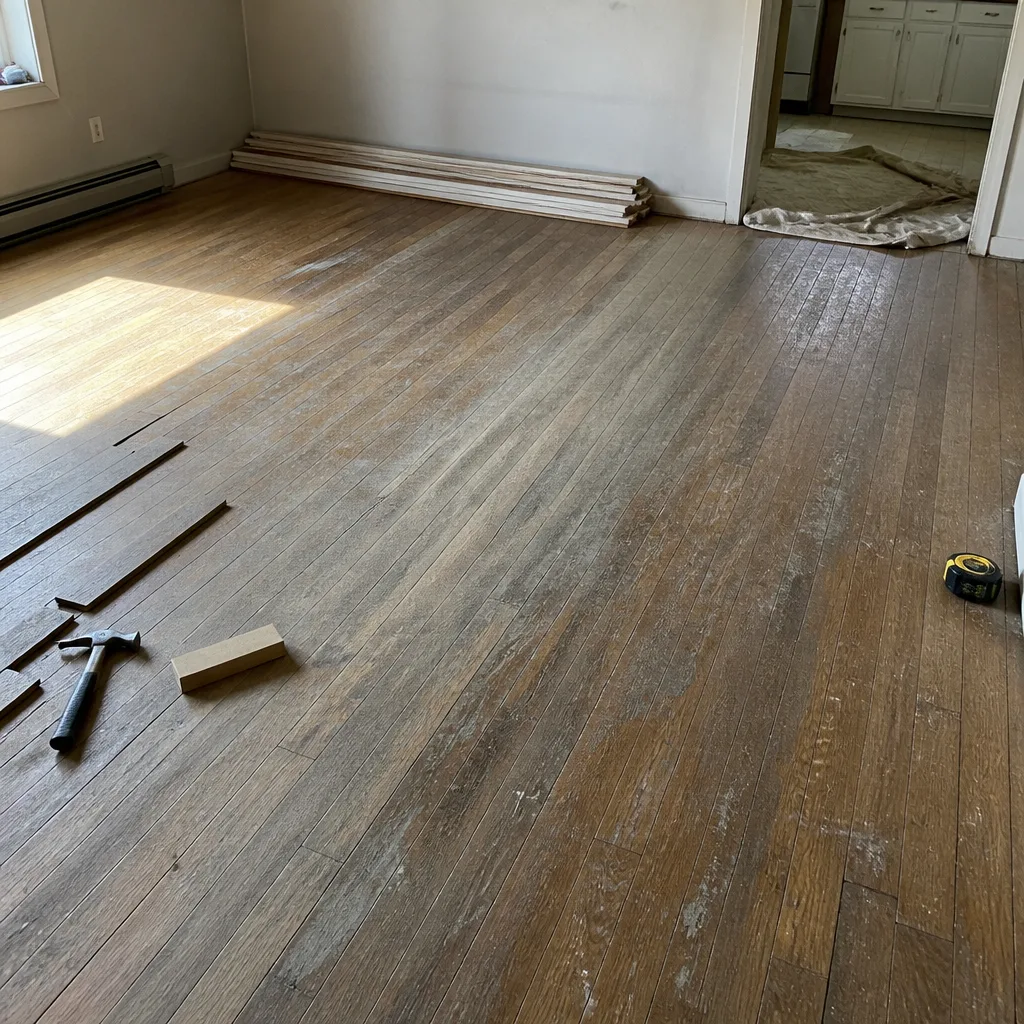 Before
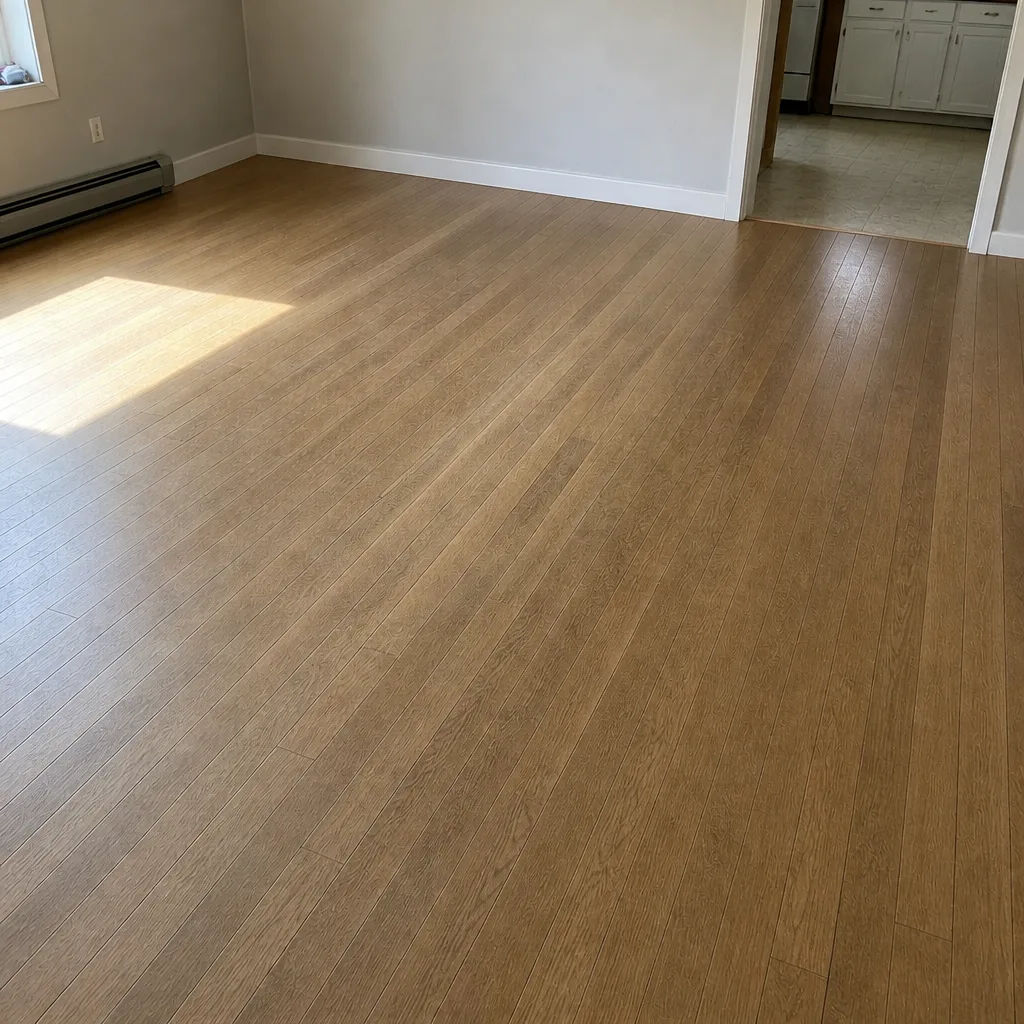 After
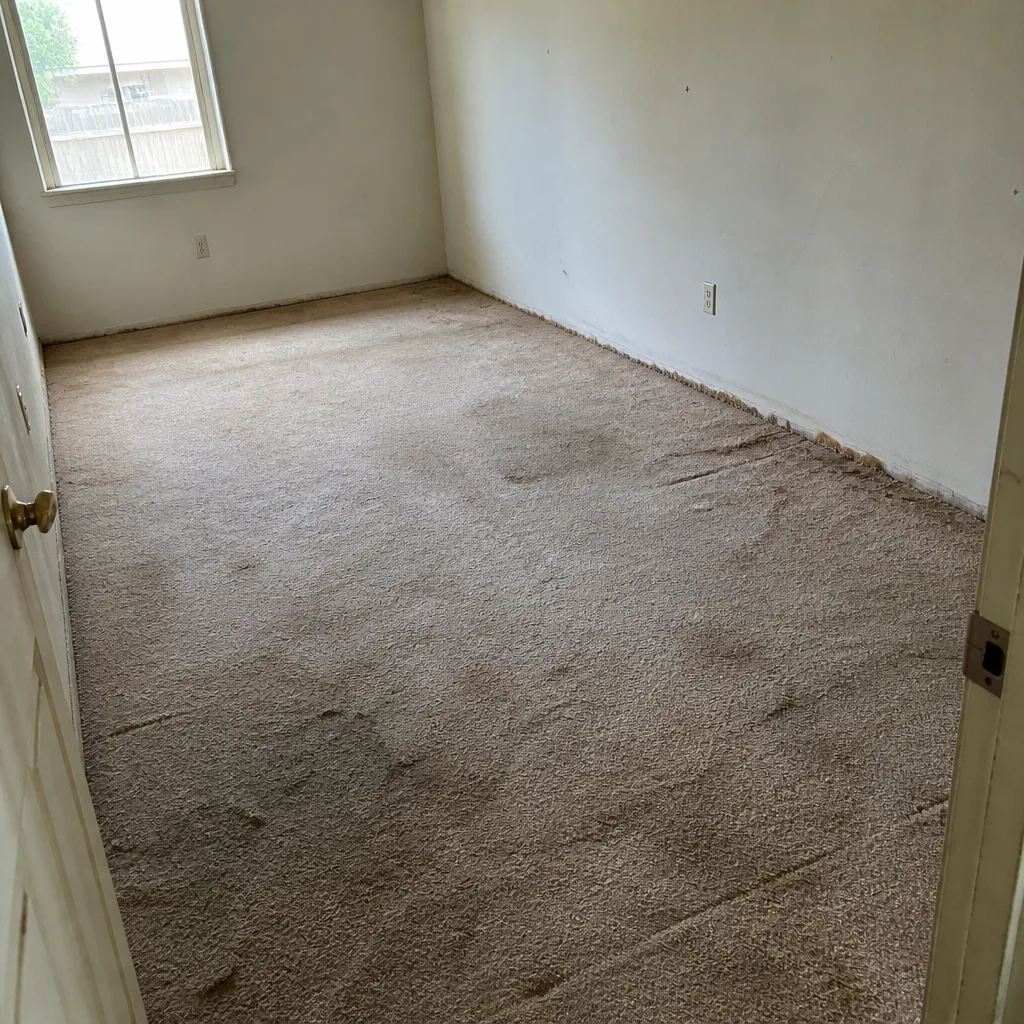 Before
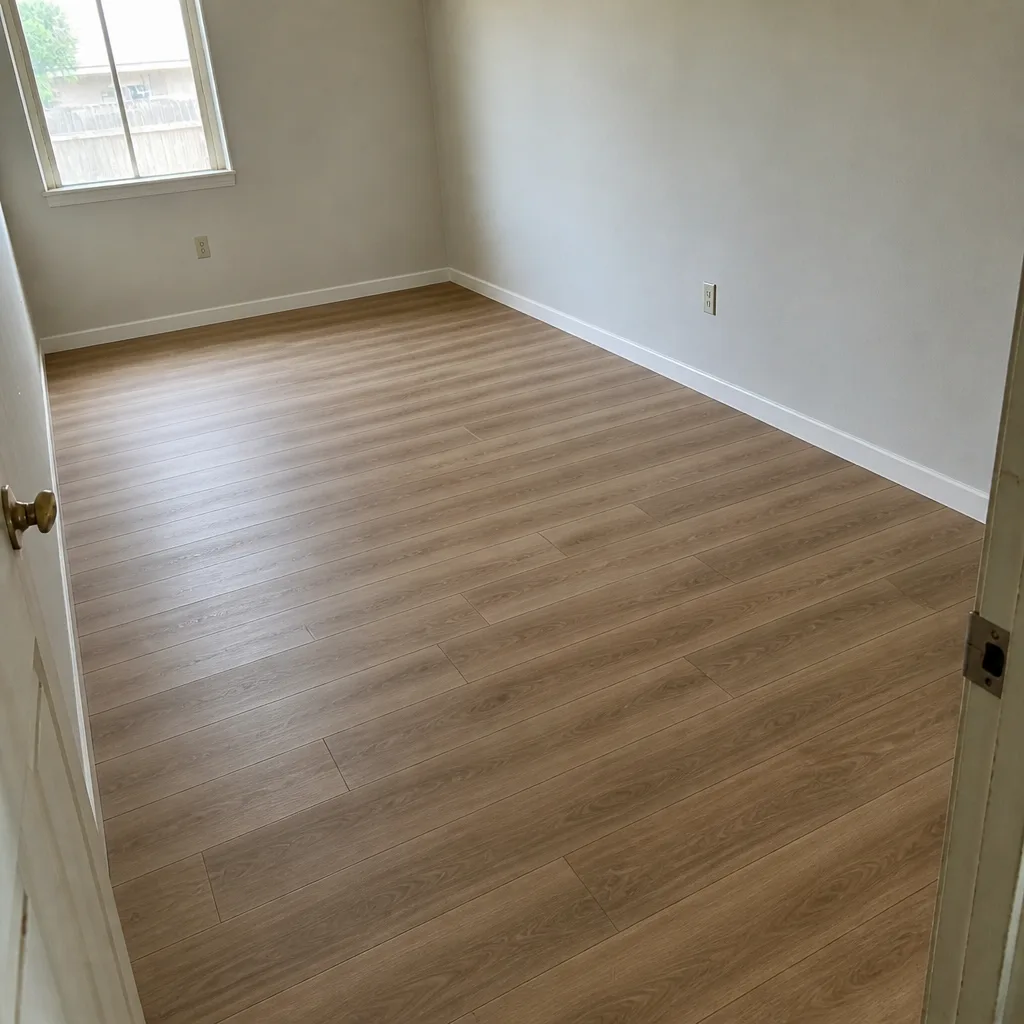 After
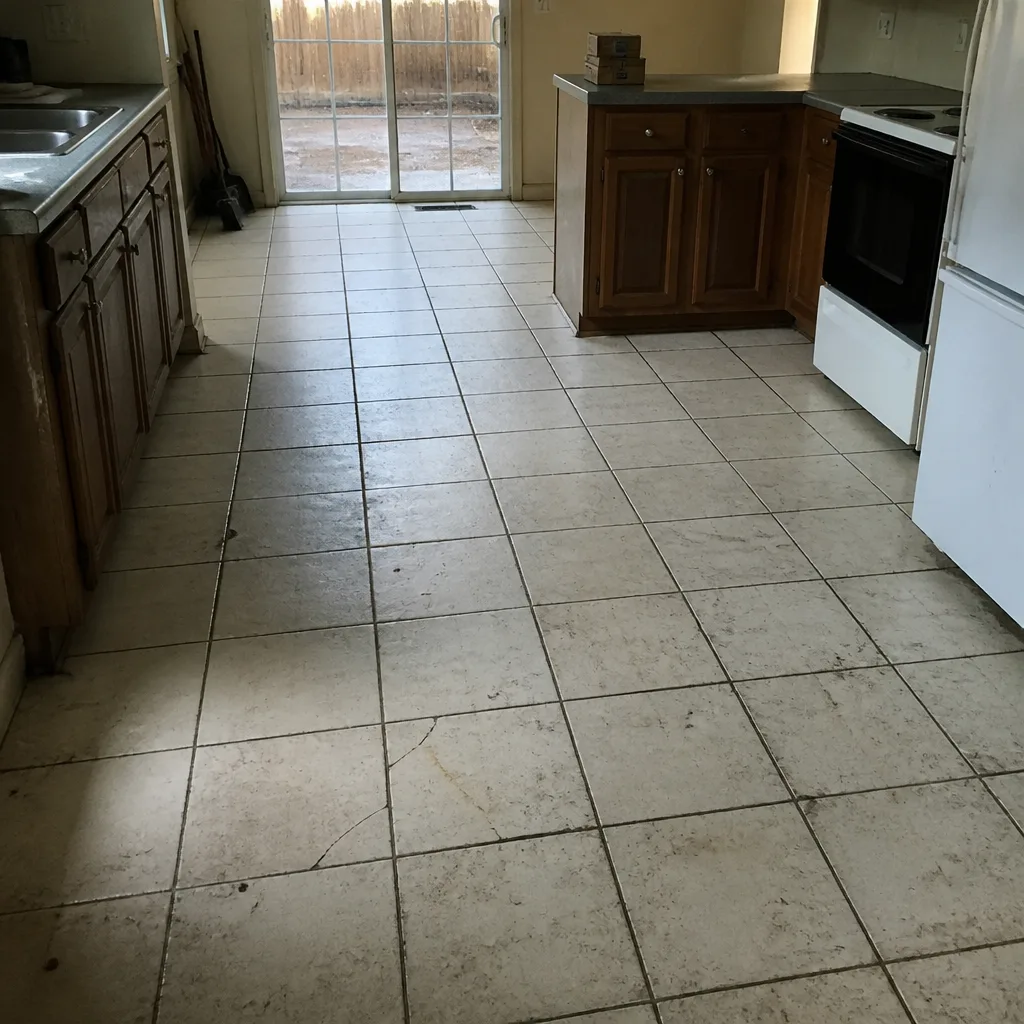 Before
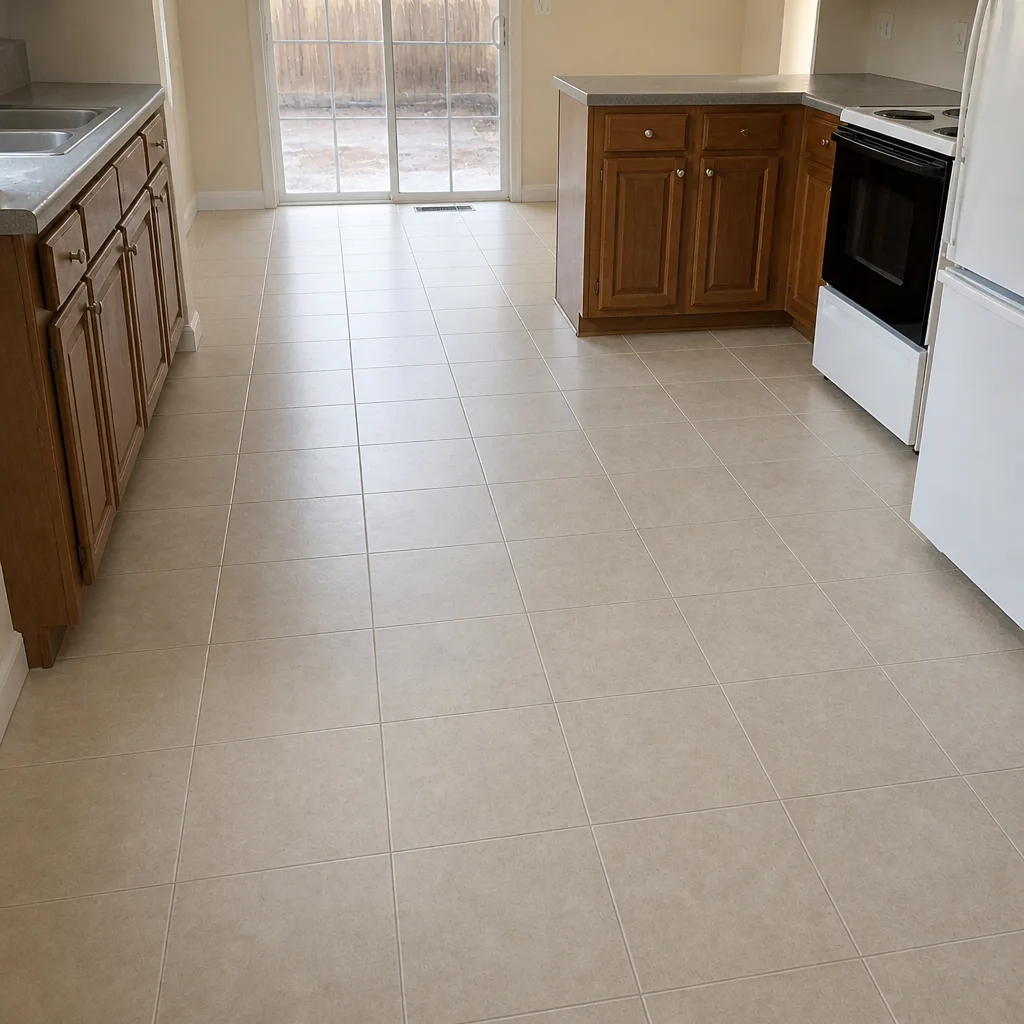 After
Common Mistakes to Avoid
- Deciding based on the picture, not the subfloor. Photos of damage show the surface. Whether the floor under the surface is sound is the deciding question. Skip that and you can make a confident choice that turns out wrong within a year.
- Refinishing a floor with no wear layer left. A hardwood floor that’s been sanded too many times has no material left above the tongue to take another cut. Refinishing it will fail. A technician can check this at the estimate, and it’s a real reason to say no to refinishing in Paradise homes where the floor has been sanded before.
- Patching a floor that has an active moisture problem. Repairing a cupped floor without addressing the moisture source is temporary. In Paradise’s dry climate it’s easy to assume there’s no moisture because the air feels dry; moisture can still be under the floor from plumbing, appliances, or the slab.
- Assuming every plank floor can be patched. Most luxury vinyl plank and laminate can’t be spot-repaired convincingly. Planning a small repair on a replace-only material usually means paying for a patch that looks like a patch, then replacing anyway.
- Skipping the tile field check on a single cracked tile. One cracked tile in Paradise often means a slab or underlayment issue propagating through the field. Replace the one tile without checking the field and the next crack comes soon after.
- Not keeping spare material from a new install. Spare carpet, spare tile, and extra planks from a recent installation are the smallest expense that buys the most future repair flexibility. Without them, matching becomes guesswork.
- Comparing a repair quote to a replacement quote. These aren’t the same decision. Get both from the same company against the same scope, so you’re comparing options rather than competing bids for different work.
When to Call a Professional
Call in a professional when any of the following is true: you feel a soft spot or a slope underfoot, you smell moisture that doesn’t clear, you have a crack that runs across multiple tiles, you have a wide field of cracked or lifted tile, a floor is visibly buckled or cupped across an area, or you’re looking at a hardwood floor and want to know whether refinishing is even possible. Those are questions that depend on being on-site and can’t be answered by a photo or a phone description. Homeowners sometimes try to stretch a repair into “just a small fix” for months and the subfloor extends the scope in the meantime. A professional assessment at the estimate stage saves money downstream, not just on the repair itself.
Flooring Installation Paradise offers free estimates in Paradise and performs carpet installation and tile flooring installation alongside hardwood refinishing. Call (888) 343-1639. We answer 24/7. Fast dispatch from 7am to 7pm, Sunday through Friday.
Frequently Asked Questions
It depends on the damage category, not the price. Surface damage on hardwood is usually a refinishing job, and structural damage confined to a small area can often be repaired. Subfloor damage usually means replacement is the right call, because a surface repair over a failing subfloor fails again quickly. In Paradise, the dry climate makes both options viable more often than homeowners expect, but the subfloor question is what decides it.
Usually yes, if the wood has enough thickness left above the tongue. That depends on the wood’s composition, condition, and how many times it’s already been sanded, which is why the check happens at the estimate visit. For a floor that qualifies, refinishing is the single most cost-effective option on the table and it extends the life of the floor you already have. Call (888) 343-1639 for a free estimate so we can confirm whether your floor is a candidate.
Pricing is per job and set by the written estimate, so the right number depends on scope, material, and the state of the subfloor. Refinishing is typically priced per square foot of the floor; replacement includes material and labor and depends on the brand and product you choose. For an exact number specific to your room, call (888) 343-1639. Estimates are free and the written estimate sets the final price.
Yes. The in-home assessment and the written estimate are both free. You’re not obligated to move forward with the repair or the replacement, and the estimate walk-through is designed to give you a real answer about whether you’re looking at a repair or a replacement, not to steer you toward a sale.
The schedule is set at the estimate once the scope is confirmed. A small repair is a shorter window; hardwood refinishing and full replacement are longer because of product-specific dry and cure times that depend on the material and the home. We don’t promise a fixed number of days before the estimate, because the same job in two Paradise homes can run different lengths depending on the subfloor and the product.
That depends on the room and how the floor needs to perform. Luxury vinyl plank is a popular choice for kitchens, bathrooms, and rentals because the products are water-resistant and hold up to busy households. Hardwood refinishing preserves existing wood, but new hardwood is a bigger investment. Carpet remains a strong fit for bedrooms and living spaces. We install nine brand lines, including Shaw, Armstrong, Daltile, and Karndean, so we can match the brand and product to the room rather than the other way around. Call (888) 343-1639 to talk through options.
The Bottom Line
Repair vs replacement is a structural question before it’s a cost question. Categorize the damage you’re looking at: surface, structural, or subfloor. Surface damage almost never justifies replacement, and hardwood can usually be refinished back to health. Structural damage depends on scope and material, and most luxury vinyl and laminate won’t repair convincingly. Subfloor damage tilts toward replacement, and deferring it compounds the cost. Ask the three questions before you sign any quote, and treat the matching problem as a real constraint. The right answer is the one that holds up for years, not the one that looks cheapest this month. To get a free estimate in Paradise and a written price, call Flooring Installation Paradise at (888) 343-1639. We answer 24/7. Fast dispatch from 7am to 7pm, Sunday through Friday. Learn more about Paradise and the flooring we install.
Written by the team at Flooring Installation Paradise.